

I have a lot of clothes. I wouldn’t call myself a clothes horse, but when I tally up the items in my wardrobe, I’m sure it’s a lot more than most individuals owned throughout human history. Globally, the average person owns about 148 items of clothing. And that average doesn’t represent disparities between—and within—countries when it comes to wealth distribution and spending habits.
We actually spend less of our income on clothing now than we did in the mid-20th century, but we buy more of it. Why? Because it’s cheap and replaceable. There are other reasons, but this has been the strongest trend driving production and consumption over the past century. Cheap labor, cheap materials, cheap transportation. There’s a cost to inexpensive clothes, though, and it’s paid for by the consumers, the workers, and our environment.
So, what to do about my own bloated wardrobes and its consequences?
After years of exploring more sustainable practices for buying and using clothes—shopping second-hand, mending clothes, keeping them longer—I finally stumbled upon compostable clothing. The reasoning behind compostable clothing is simple: if a garment cannot be infinitely recycled (it can’t) then it will eventually end up in a landfill. Unless it can be fully composted.
It’s trickier than you’d expect to find or make compostable clothes, even though they were the norm before synthetics hit the market. A shirt that says “100% cotton” will likely have synthetic sewing thread in it, potentially harmful synthetic dyes, or printed graphics with non-compostable inks. Despite these challenges, returning our clothes back to the earth could prove to be a true solution to the clothing waste problem.
Clothing and the “circular economy”
My search for low-impact clothing has been a long time in the making.
In 2007, I was working at an environmental nonprofit in Washington, DC and I had the opportunity to see green architect William McDonough speak at an award ceremony. Feeling inspired, I snagged a copy of his book Cradle to Cradle: Remaking the Way We Make Things. The “cradle-to-cradle” concept is meant as a response to the phrase “cradle-to-grave,” which implies a linear direction for consumer goods: from production to use and reuse, and then on to waste (note: it was originally coined by Swiss architect Walter Stahel).

I had never considered the fact that, no matter how many times I used the items I owned, how many times I fixed them, or how many people owned them before and after me, most of the items would end up in a landfill or incinerator. Some things can be recycled, but only certain types of glass and metal can be recycled indefinitely. And very few things I used or owned could be composted, especially at home.
Since then, I’ve spent a lot of time learning about the life cycle of clothing, and the social and environmental impact of clothing production and waste. I found less impactful clothing options—thrifting, mending, organic textiles, recycled plastic clothes—but these were all simply delaying the inevitable. If the material of my clothes couldn’t be composted, it was becoming waste.
I don’t want to dismiss all these better options. We honestly don’t have much choice at the moment. I still buy new garments sometimes, and typically they are not “made sustainably.” I do what I can, and I try to do better. Unfortunately, I’m only one person, and the entire concept of “voting with your dollars” is wildly flawed.
There have also been setbacks and failures faced by the “cradle-to-cradle” trailblazers in other industries, particularly when it comes to building construction and transportation. We don’t yet have the technology to make everything compostable or infinitely recyclable, and it’s possible that we never will. The idea of a “circular economy” or “closed-loop” manufacturing have gained popularity and media attention, but even these terms have recently succumbed to use as a greenwashing tool.
Luckily, clothing is, by nature, a little simpler than, say, a building, and airplane, or a medical device. There are other big players in arena of sustainable and ethically-made clothing, like the Ellen MacArthur Foundation and the B-Corp certification group (which, again is not perfect), and lots of smaller orgs, too. Fashion companies are catching on, too.
Compostable clothes exist now, but not on a large scale. They’re either made by individuals, or by some small, intrepid companies who also dream of lower-impact clothing. These companies produced a limited range of items, which are currently not affordable for most people. Others claim to make “biodegradable” clothing, while their garments actually break down into microplastics and take hundreds of years to degrade.
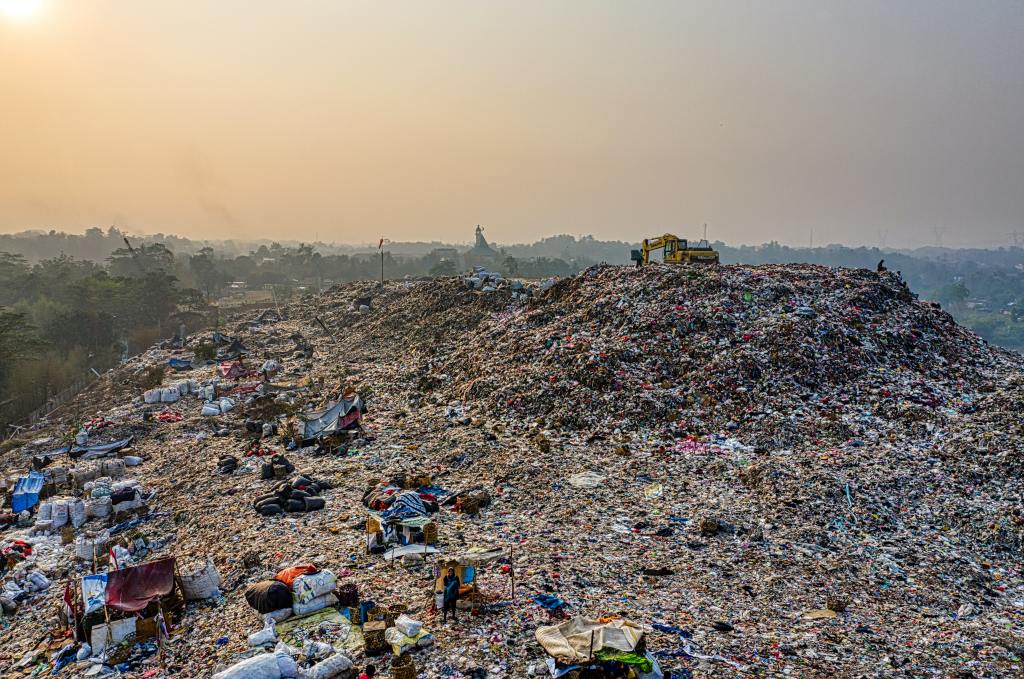
But, it’s a start. To me, the idea of compostable clothing is a beautiful dream—one that’s worth chasing. It’s a utopian sci-fi vision we can do our best to bring to life. We need more solutions to the problems embedded in the fashion industry—such as living wages and healthy conditions for workers—but I see those solutions as being both compatible and inextricably linked with a sustainable clothing life cycle. If you could imagine a world that could provide humans with what they need as safely as possible, wouldn’t that be an elegant solution?
So, why not try, one small step at a time?
Buying vs Making Compostable Clothes
It’s that small step I’ve been thinking about taking. I’ve taken many small steps up until this point. Sometimes they are personal—choosing what I buy mindfully, making clothes last, deciding what to do with them when I no longer need or want them. Other steps are more systemic, like considering the environment and social justice when I vote, when I donate money, and when I share my thoughts with others through speaking and writing.
I will continue to do all of these things, but I do get tired of sipping the dregs of a dysfunctional consumer economy.
I may buy a garment or two from the new compostable clothing companies when things in my current wardrobe start to wear out. But, as an amateur knitter and sewist, I can’t help but try to make my own. I’m curious about the whole process—how do you source the materials? What are the pros and cons of compostable materials and dyes? How long do they last?

Making one compostable garment isn’t the solution to this vast problem—we’re not all going to spend hours and hundreds of dollars making our own compostable clothes. Most people don’t have the money, time, knowledge, or resources to do this. We don’t even have enough organic fibers and textiles to do this on a large scale yet.
But, it will be my own little experiment. I want to make a wardrobe that can be used for as many years as possible, then go back into the earth instead of ending up in a landfill. I hope you’ll join me as I embark on the journey of making my first piece of compostable clothing: socks!
 mushrump.com